
Nigeria: Solar Pump for Community Garden at Safe House
Nigeria: Solar Pump for Community Garden at Safe House
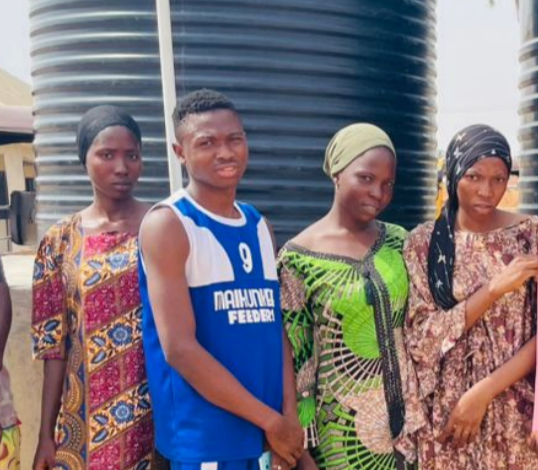
Maikunkele Safe House
Members:
Oluwarotimi Esther
Rahmat Gaffar
Maman Narayan Wushishi
Umuratu Sodiq
Balikis Wasiu
Sherifat Kabir
Danladi Lubaba
Email: saheeds731@gmail.com
Phone: +2347045382667
When and why did your group become humanist and what does humanism mean to your group?
I became a humanist when I was 20 years old. As a former ex-Muslim and an Islamic-trained preacher, I discovered that Islam has many elements of irrational ideas and thoughts that are based on supposed revelations that promote hatred, classism, war, demonization of freethought, and free inquiry. I then renounced the religion, its God Allah, and its teachings. I discovered humanism through books as an independent researcher. Humanism, more than any religious orientation or philosophy, has made my life more accessible and meaningful. It represents reason, compassion, and a commitment to improving human well-being.
Project Description
The Maikunkele Safe House Humanist Community Garden currently depends largely on seasonal rainfall for crop production, limiting farming activities to certain periods of the year. During the dry season, farming operations slow down significantly or stop entirely, reducing food availability and income opportunities for the community.
This project seeks to install a solar-powered water pumping machine and a simple irrigation system to enable year-round farming. The system will draw water from a nearby source and distribute it across the farm using hoses and irrigation lines, ensuring that crops receive adequate water regardless of rainfall conditions.
By harnessing solar energy, the project provides a sustainable and cost-effective solution that eliminates the need for fuel-powered pumps. This will allow the Safe House to maintain continuous cultivation, improve crop yields, and stabilize food production throughout the year.
Benefits to the Farm and Members
Year-Round Farming: Enables continuous crop production during both rainy and dry seasons.
Increased Productivity: Reliable water supply leads to healthier crops and higher yields.
Cost Savings: Solar power eliminates ongoing fuel expenses.
Reduced Labor: Irrigation system simplifies watering processes and saves time.
Climate Resilience: Protects farming activities from unpredictable weather patterns.
Skill Development: Members will learn how to operate and maintain solar-powered agricultural systems.
Pathway to Sustainability
The solar-powered irrigation system will transform the Maikunkele Safe House Community Garden into a reliable, all-season agricultural enterprise. With consistent water supply, the garden can support multiple planting cycles and produce a steady stream of crops for both consumption and sale. Income generated from surplus produce will be reinvested into maintaining the irrigation system, purchasing farm inputs, and supporting other community initiatives. Over time, this project will significantly reduce dependency on external support while strengthening the Safe House’s long-term food security and economic resilience.
Budget ($900)
● Solar water pump (submersible/surface) – $350
● Solar panels (suitable capacity) – $250
● Water storage tank (1000L) – $120
● Irrigation pipes and hoses – $100
● Pump controller/inverter – $50
● Connectors, fittings, and installation materials – $30
Total: $900
Expected Income from Project, with Timeline
With the installation of the solar-powered irrigation system, the community garden will begin dry-season farming immediately, enabling continuous crop production throughout the year. Within the first 2–3 months, fast-growing vegetables such as spinach, okra, and peppers are expected to generate an income of approximately $100–$140 per harvest cycle. By 6 months, consistent irrigation will support multiple harvests, increasing income to about $180–$250. Over a full year, with uninterrupted farming and diversified crops, the project is projected to generate between $500–$700. This income will be reinvested into farm operations, system maintenance, and community development, ensuring sustainability.
Benefits to your Community
● Enables year-round food production
● Improves food security and nutrition
● Increases income through continuous harvests
● Reduces dependence on rainfall
● Promotes renewable energy use
● Builds technical and agricultural skills
● Strengthens long-term sustainability