Report – Emergency Humanist Relief Support.
Abraham Kasisi
Final Interim Report – Emergency Humanist Relief Support
LGBTQI+, Humanists, and Atheists Refugees & Asylum Seekers Network
Gorom Refugee Settlement Camp, South Sudan
Date: 18 December 2025
Contact Information:
Telephone / WhatsApp / Signal: +211 926 516 608
Email: kasisiabram@gmail.com
1. Background
In December 2025, the LGBTQI+, Humanists, and Atheists Refugees & Asylum Seekers Network received an early disbursement of USD 600 from Humanist Mutual Aid, representing 50% of the approved 2026 grant. This advance funding was provided in response to urgent humanitarian needs among highly vulnerable LGBTQI+ refugees and asylum seekers residing in Gorom Refugee Settlement Camp, South Sudan.
The funding enabled an immediate emergency response focused on food security, health, hygiene, dignity, and access to clean drinking water. All activities were implemented in alignment with Humanist principles of compassion, equality, dignity, and mutual aid, prioritizing the most marginalized members of the community, including transgender refugees, people living with HIV, women, children, and elderly LGBTQI+ individuals.
2. Activities Implemented
A. Food Distribution
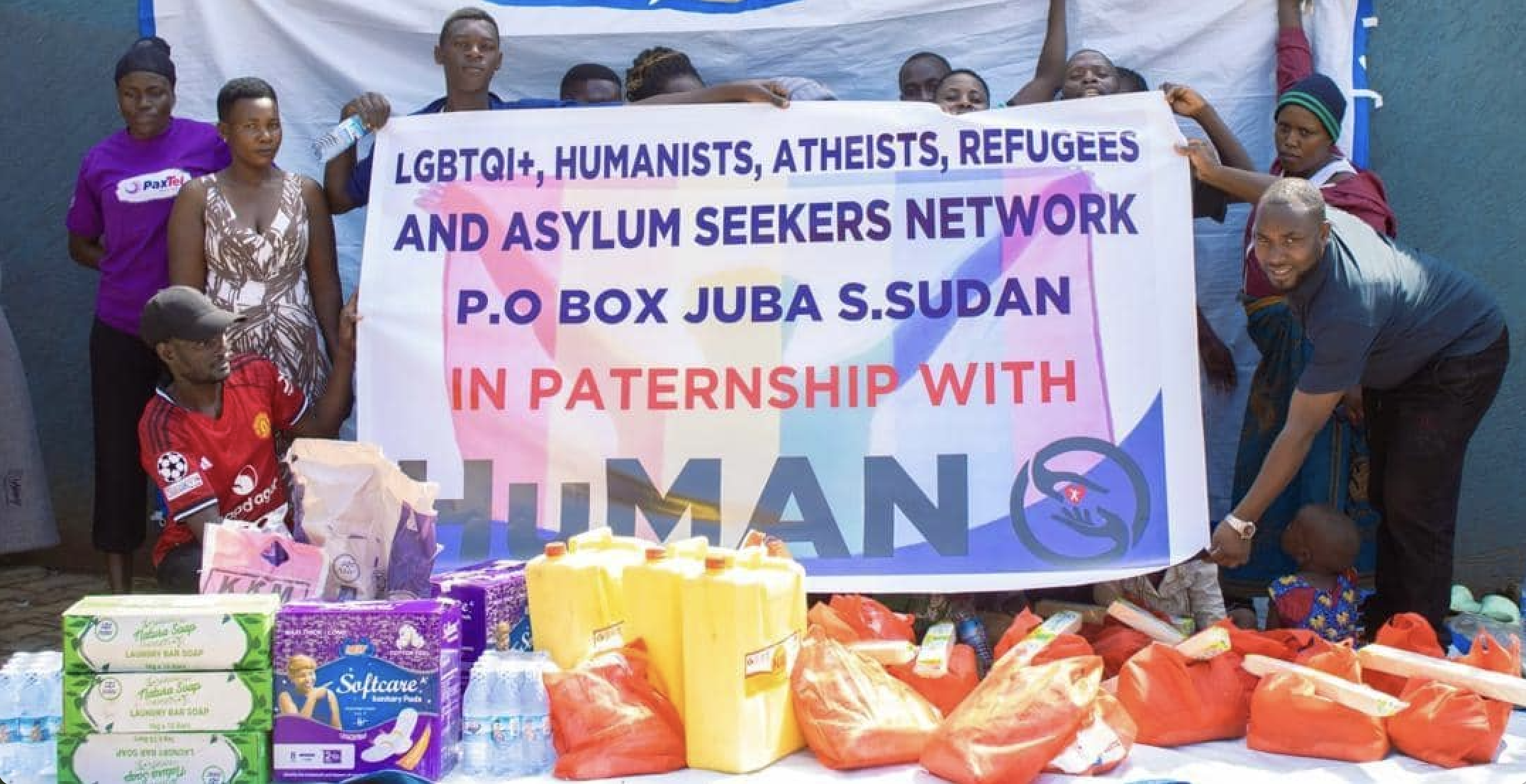
The network purchased and distributed essential staple foods, including maize flour, rice, beans, cooking oil, and salt. These items were selected to provide basic nutrition and sustain households facing extreme food insecurity.
A total of 85 households, representing approximately 320 individuals, benefited from this support. Priority was given to transgender refugees, households with children, HIV-positive members, and elderly individuals. The distribution significantly reduced hunger, improved daily nutrition, and helped stabilize vulnerable households during a critical period.
B. Menstrual Health and Hygiene Support
Menstrual health and hygiene kits were procured and distributed to women, girls, transgender women, and queer youth. Each kit included sanitary towels, bathing soap, laundry soap, toothbrushes, and toothpaste.
A total of 120 beneficiaries received these kits. This intervention restored dignity, reduced the risk of infections, and improved physical and psychological wellbeing, particularly for individuals who had previously lacked access to basic hygiene materials.
C. Essential Medicines and First Aid
Basic medicines and health supplies were purchased, including painkillers, oral rehydration salts (ORS), antiseptics, bandages, and mosquito nets. These supplies were distributed to individuals experiencing illness or heightened health risks.
Sixty individuals benefited directly from this intervention, including people living with HIV, elderly refugees, and those recovering from common illnesses. The support improved access to basic healthcare and helped prevent complications from untreated conditions, including malaria and dehydration.
D. Clean Drinking Water and Emergency Support
Clean drinking water was secured for the most vulnerable households, particularly families with children and individuals with compromised immunity. In addition, limited emergency transport support was provided to facilitate access to urgent medical care for critical cases.
This intervention reduced the risk of waterborne diseases and ensured timely access to healthcare services when needed.
3. Financial Utilization Summary (USD 600)
The full amount of USD 600 was utilized responsibly and transparently as follows:
Food supplies: $285
Used to purchase maize flour, rice, beans, cooking oil, Wheat flour,sugar and salt for vulnerable households.Medicines and first aid supplies: $90
Spent on painkillers, ORS, antiseptics, bandages and mosquito nets.Hygiene and dignity kits: $60
Covered sanitary towels, soap, toothbrushes, and toothpaste.Clean drinking water: $60
Used to secure safe drinking water for vulnerable households.Transport for emergency medical cases: $30
Supported urgent travel to health facilities for critical patients.Transaction and transfer fees: $20.
Internet and communication costs: $25
Used for coordination, reporting, beneficiary follow-up, and communication.Transport costs:$30
Total expenditure: $600
All funds were fully utilized for the intended humanitarian purposes.
4. Beneficiaries Reached
The intervention directly reached approximately 340 individuals, including:
45 transgender refugees
60 people living with HIV
90 LGBTQI+ children and dependents
120 women, girls, lesbianwomen, and queer youth (menstrual health support)
25 elderly LGBTQI+ community members
5. Beneficiary Testimonials
“For the first time in months, I did not go to bed hungry. The maize flour and beans we received gave me strength to continue.”
Charity (Transgender refugee)
“The sanitary towels and soap restored my dignity. Before, I felt ashamed and isolated. Now I feel respected and cared for.”
Rita (Queer youth beneficiary)
“I was sick with fever and had no medicine. The painkillers and mosquito net saved me from worse illness. I am grateful for this Humanist support.”
Henry (HIV-positive refugee)
“Clean drinking water means my children are safe from diarrhea. This is life-saving for us.”
Annet (mother of two)
6. Outcomes and Impact
The emergency response achieved the following outcomes:
Reduced hunger and food insecurity among highly vulnerable households
Improved access to basic healthcare and prevention of common illnesses
Enhanced dignity, hygiene, and wellbeing for women, girls, and transgender members
Reduced exposure to waterborne diseases through access to clean drinking water
Strengthened trust and solidarity within the LGBTQI+ refugee community through inclusive, Humanist-led mutual aid
7. Monitoring, Accountability, and Transparency
The network implemented strong accountability measures throughout the response period. Financial records were collected and safely stored. Beneficiary lists were maintained, and community feedback sessions were held to ensure fairness, transparency, and inclusivity. Photos of distributions and activity documentation are available upon request.