

A Conversation with Usman Abdu Abubakar (Chad Humanist)
by Carol Lloyd - January 23, 2025
In N’Djamena, the capital of Chad—one of the poorest countries in the world—Usman Abdu Abubakar has built something rare: a growing ecosystem of practical hope. An autodidact who never graduated from high school, Usman taught himself English by reading widely, discovering humanism through writers like Bertrand Russell and Stephen Jay Gould. Their ideas shaped a simple commitment: serve the most vulnerable people in his community.
Today, as a partner with the Humanist Mutual Aid Network (HMAN), Usman oversees an extraordinary range of grassroots projects: a community well, a pharmacy, Zai farming education, fruit and nut tree planting at schools, an orphanage with small businesses attached, vaccine and dental clinics, solar power installations, and most recently an internet café. He even wrote and recorded an original song about the movement, “The Human Song.”
After traveling to Kumasi, Ghana, to meet with other African partners and HuMAN founder Hank Pellissier, Usman spoke about what it takes to run so many initiatives at once—and why humanism, for him, is about action more than ideology.
Q: You’ve just launched an internet café in N’Djamena. How is it going?
Usman: It’s going well. We have people coming in, the locals there are all coming in to get the internet and use it for their assignments in school, working on projects, and various things. Some people come there just to wile away time, enjoy themselves, check out social media accounts.
Q: Are you running it yourself?
Usman: Yeah — I am running it with others Monday through Thursday, at least eight hours a day. I train another person to help me oversee the café. So in case I have an emergency or I have to go somewhere, he steps in.
Q: Will you offer computer training too?
Usman: We are looking to integrate that into the system. That’s the next stage of the project.
Q: You’re known for your Zai farming project. What’s the status now? [ Zai, a drought-resistant technique that concentrates water and compost in small planting pits, is especially suited to Chad’s harsh climate. For Usman, it’s both a climate mitigation strategy and a path to women’s economic independence.]
Usman: Zai farming is very good. It’s happening. Oh. It’s so good. I originally trained 10 women, and they trained the next group — now we’re up to 25–30 women who are zai farming on their land. I also bought land to continue this training. I do the training. I have trained two women to train others. They know Zai very well among the women. And as they farm, they give me feedback, and we improve the program. I went to inspect it recently, and it’s going perfectly. The crop they got last year was actually tall.
Q: So the model is spreading?
Usman: Yeah, other people want to learn.
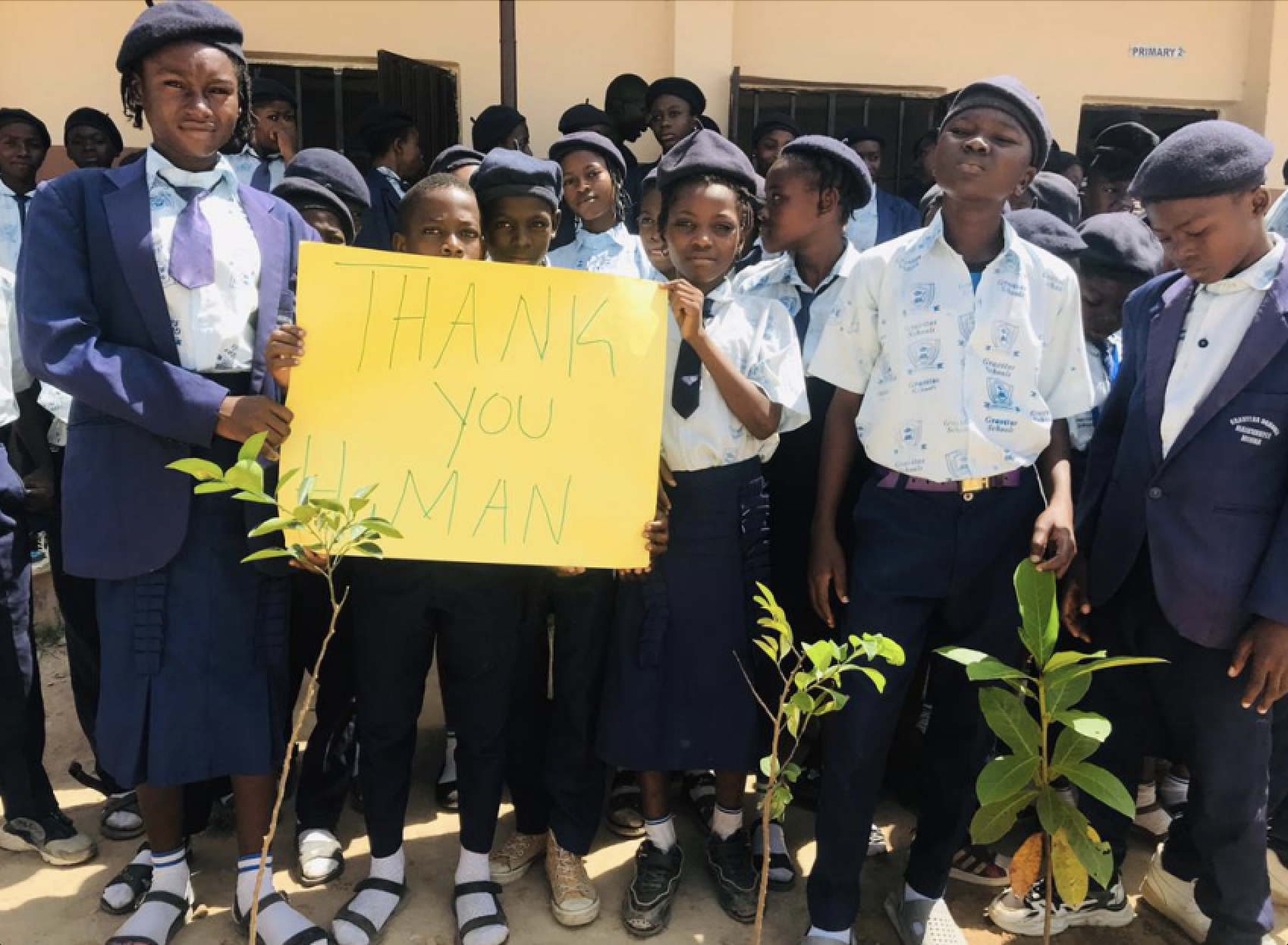
Usman helped local schools plant fruit trees on their campuses
Q: You’ve also brought tree planting into local schools. What inspired that?
Usman: Fruit trees, yes, as well as nut trees. We began with about four schools, and now that I can show that the project was a success, I'm looking to propose it to some other schools. I feel that if we can integrate the fruit tree planting into the classroom, we can teach the children in the high school the value of planting trees, food, and environmental farming practices. Long term I think it can bring a lot of healthy ecosystems back and reduce global warming. Short term it can offer the schools an extra source of food and shade.
Q: Are the trees producing yet?
Usman: Yeah. I think one tree — guava — is actually producing a lot of fruit this year, but the others — oranges, mangos — are growing very well, but they take longer to become productive.
Q: Several of your projects are small businesses designed to sustain themselves. How is the pharmacy doing?
Usman: It’s actually going fine. Yes, it’s functioning well, and it’s generating a lot of money for them.
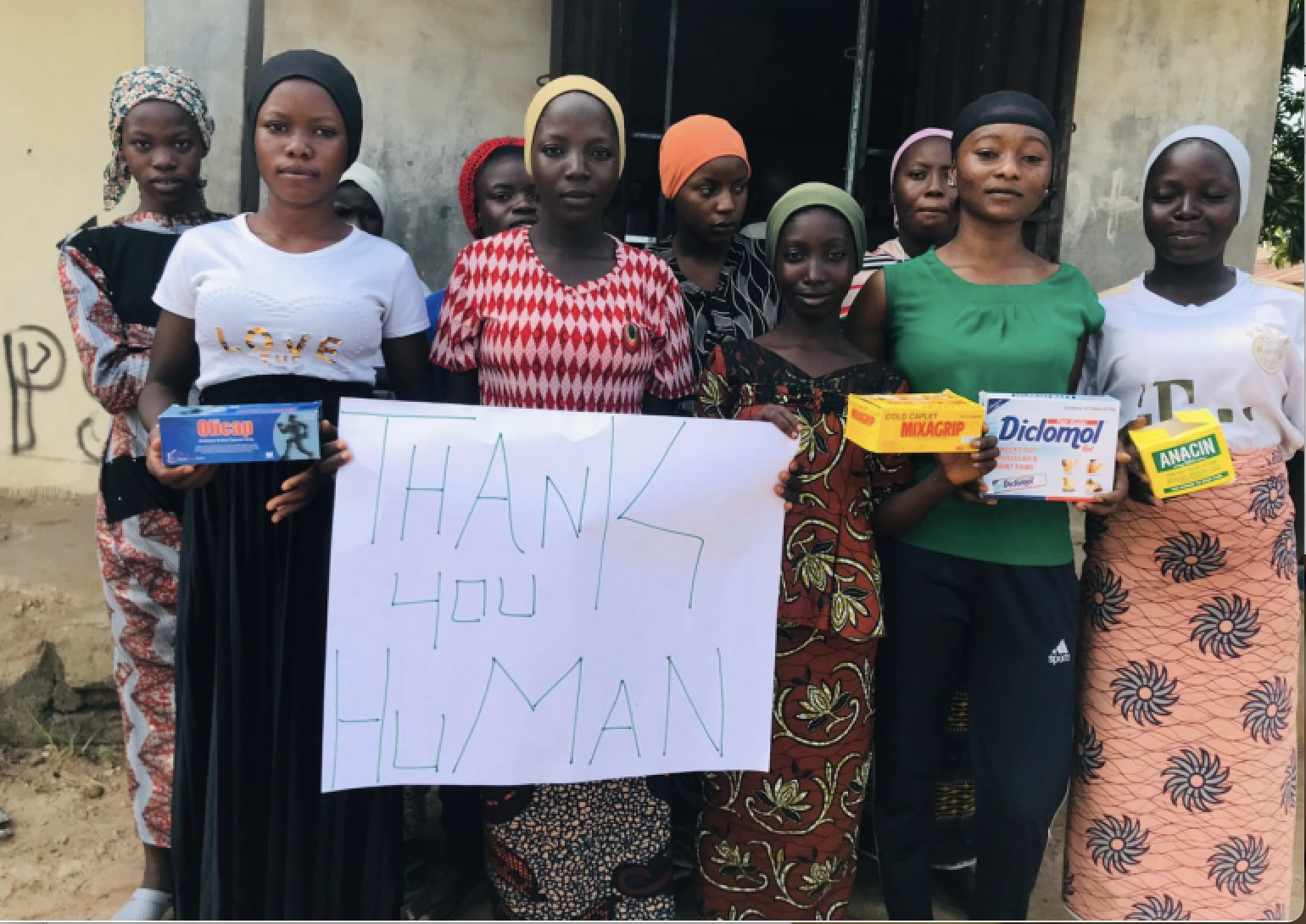
Usman helped establish the Hope Health Pharmacy in N’Djamena
Q: And the shoe-making project that uses recycled tires?
Usman: Yeah, that’s great. That’s going fine. We trained one person, and he is currently doing it.
Q: Tell me about the orphanage.
Usman: The orphanage is outside of town, and recently, we have been getting more children, but currently, the lady managing it is pregnant. So we’re having a little bit of a challenge. It’s a lot for her at the moment, but we’re pushing through. She’s trying to do everything. They also developed a laundromat, a pellet machine, and a confectionery shop as part of the orphanage. For the candy store, I was looking at maybe expanding it. We can make it bigger by getting more food and selling to a larger market of people.
Q: Chad has abundant sun. How are the solar projects working?
Usman: We have a lot of sun here. Yeah, so much. We get a lot of sun in Chad, so they are good. It just takes some maintenance. After the rainy season, we get the harmattan season of hot, dry, dusty wind. The dust stains the solar panels, so we hire people to clean each one because we get a lot of dust in N’Djamena. So that’s a challenge for them.
Q: And you oversee that too?
Usman: I do. I run the solar project myself.
Q: You’re juggling a lot. How do you manage it all alongside your day job?
Usman: So I kind of have someone in charge whom I trust. He gives me reports because I can’t check on all of the projects at once. I just go check in on him. I give him a call. How is he going? Is there any issue? Is there something I need to know? And then he tells me whatever it is.
Q: You also wrote and recorded a song about the Humanist Mutual Aid Network. How did that happen?
Usman: Yeah, I made it with a couple of friends. I have like a background in poetry. I have read a lot of songs. So I spent some time writing the words to the song, and then we recorded it on the phone. Then we went into a studio to make the beat and record it. I sang the song to the studio people, and they loved me, so they had me record the voice. They created musical tracks for it. I was grateful. I loved doing it.
Q: Looking ahead, what’s next?
Usman: I would like to develop a laundry business. We have one at the orphanage, but I would like to develop a bigger business in the city that can serve more people.
Q: You’ve spoken about humanism growing quietly among young people in Chad. Why do some leave religion?
Usman: I think a lot of people kind of have this experience growing up in my community. They have troubled times as young adults. They have this traumatic kind of poverty, and they start reading, they’re sort of, okay, let’s think about my life: Am I going to be financially okay? So a lot of young people tend to think a whole lot, and it opens up questions for them to think about everything. So as they do that, they’re taking a lot of information in, and that information informs the decisions they make in life. Then a lot of people have conflicts with their parents. They might go to a Madrasa to start asking questions, and what they think will also depend on the answers they get. Some become humanists.
Q: Is it dangerous to be a nonbeliever?
Usman: It is. I think in the whole of Africa it is.
Q: Does it differ by religion?
Usman: Yes, definitely, it’s not the same. The Christians are typically more open to you leaving, but the Muslim community is not.
Usman’s version of humanism is not abstract philosophy but daily service: water, food, medicine, shade, electricity, and internet access. Each project is modest on its own. Together, they form a web of resilience. Asked how he keeps going, he doesn’t talk about recognition or ambition. He talks about training others, checking in, and improving things step by step. In a place where resources are scarce and the needs are immense, that steady, practical optimism may be his most powerful tool of all.