
Guinea-Bissau: Greenhouse Tomato Sustainability Project
Guinea-Bissau: Greenhouse Tomato Sustainability Project
Greenhouse Tomato Sustainability Project
Bissau Secular Humanist Agro-Cooperative
Sector Autónomo de Bissau, Guinea-Bissau
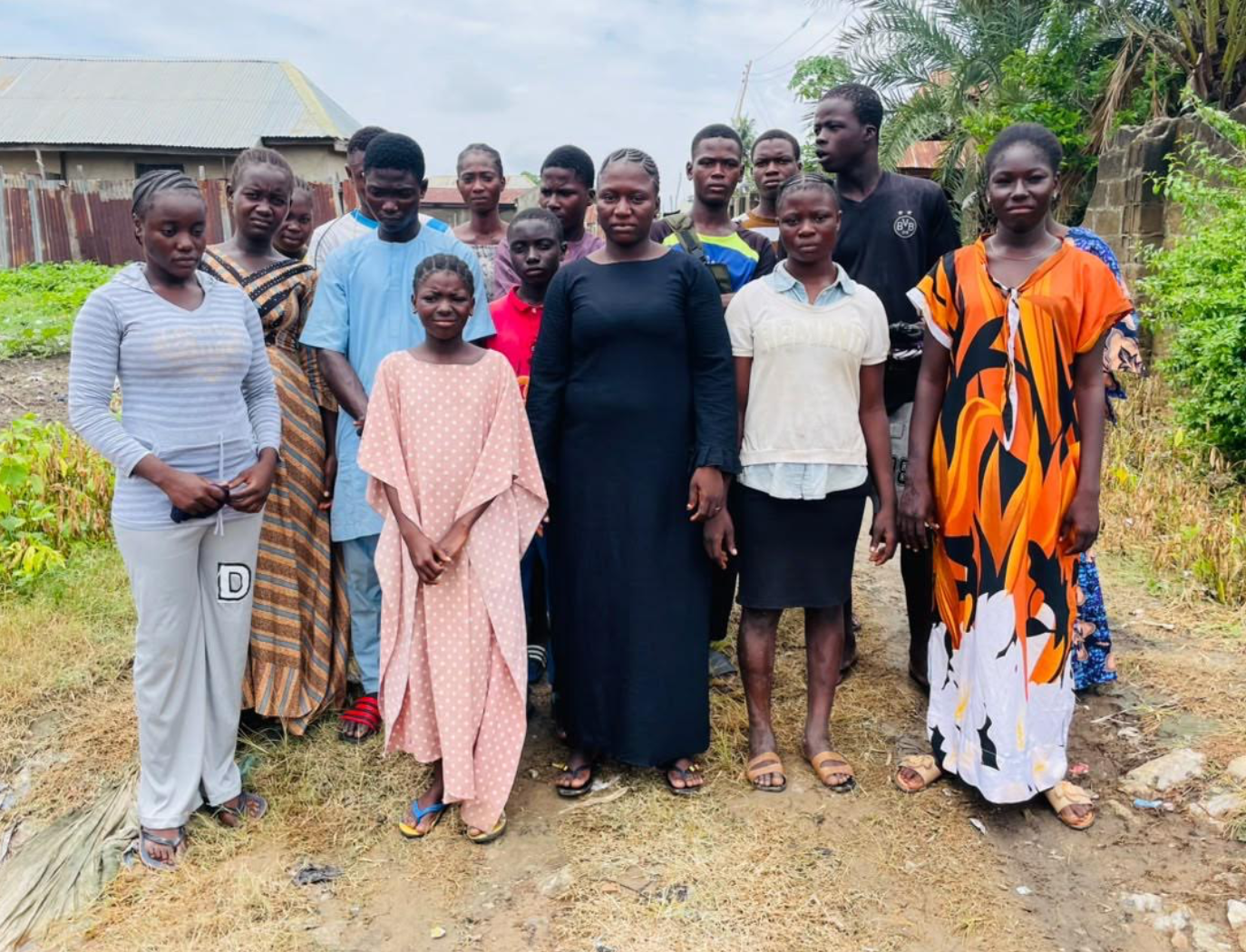
Members: Felismina Vaz, Mariama Camará, Adama Sanhá, Aissatu Baldé, Fatumata Djaló, Djénabou Cassamá, Salimatu Mané, Ramatulai Embaló, Kadiatou Sissé, Ahmed Rafiu, Mamadu Gomes, Amadu Indjai, Eridson Vieira, Domingos da Silva, Bacar Mendonça
Email: vazfelismina95@gmail.com
Phone: +245 955 355 735
What does humanism mean to you?
To our group, humanism is the profound realization that human beings are entirely responsible for their own well-being, progress, and survival. Our collective transition away from organized religion and the belief in God stemmed from a shared observation of our material reality: for generations, our community relied heavily on prayer, religious dogmas, and the promise of divine intervention to solve deep-seated challenges like poverty, food insecurity, and health crises. We stopped believing because we realized that these prayers remained unanswered, and the reliance on supernatural entities only fostered a culture of passivity, complacency, and fatalism. We chose to leave organized religion because it consistently shifted the focus away from human agency, often attributing human suffering to "divine will" rather than addressing systemic, fixable problems. Embracing atheism and humanism provided us with immense clarity. It taught us to rely on human reason, compassion, and scientific inquiry to actively alter our circumstances. Humanism means that we do not look to the skies for miracles; instead, we look to one another, using practical, evidence-based tools like sustainable agriculture to build a better, more compassionate world right here and now.
Project Description
The Greenhouse Tomato Sustainability Project is an innovative, community-led initiative in Guinea-Bissau designed to achieve financial independence while promoting sustainable agricultural practices. By utilizing greenhouse technology, our group will cultivate high-quality tomatoes year-round, bypassing the harsh limitations of seasonal weather variations and pests. This climate-resilient approach ensures a steady, predictable yield, allowing us to supply local markets with fresh, nutritious produce consistently while maximizing market pricing during off-seasons. The revenue generated from this farm will create a self-sustaining economic loop. A portion of the profits will be reinvested directly into expanding the greenhouse infrastructure, while the remainder will serve as a reliable funding source for our local humanist outreach, educational programs, and community welfare initiatives. By establishing a successful, evidence-based business model, we aim to demonstrate to our locality that human cooperative effort, scientific methodology, and strategic planning are fully capable of solving economic hardships and improving human lives without relying on divine intervention.
Budget
The total requested budget of $300 covers the complete materials needed to construct and plant a functional starter greenhouse footprint using cost-effective regional inputs.
Greenhouse Structural Framing: for localized structural timber and bamboo supports. -$75
UV-Resistant Polyethylene Sheeting (200 Micron Cover): for heavy-duty protective plastic film. -$95
Insect Netting & Shade Mesh: for breathable lining to protect crops from insects and heat. -$50
High-Yield F1 Hybrid Tomato Seeds: for disease-resistant, greenhouse-optimized seeds. -$40
Gravity-Fed Drip Irrigation Hoses, Manual Tools, & Nursery Trays: for core water-management components and seed starting tools. -$40
Total Budget: $300
Expected Income from Project, with Timeline
Because the greenhouse protects the crops from external elements, we anticipate structured, year-round harvest cycles providing strong profitability margins.
Months 1 to 2 (Setup & Germination): Infrastructure construction and seed germination. Zero income.
Months 3 to 5 (First Production Cycle): The first harvest will yield approximately 350 kg of premium tomatoes over a staggered 6-week window. Selling at local wholesale rates of roughly $1.00 per kg during the off-season generates $350.
Months 6 to 8 (Second Production Cycle): Secondary planting cycle yielding an expected 400 kg due to optimal soil calibration, generating an additional $400.
Annual Outlook: Total expected gross revenue for Year 1 is $1,050 to $1,200 across three complete growing cycles, securing complete self-sustainability after the initial $300 grant injection.
Benefits to our Community
The project provides several immediate and long-term benefits to the local Bissau community:
Food Security: It introduces a stable, climate-resilient source of nutrient-dense produce to local markets during the dry and rainy seasons when open-field tomato prices skyrocket.
Economic Empowerment: It provides direct, equitable cooperative agricultural employment and technical skills to our 15 group members.
A Living Example of Secular Progress: By visually demonstrating that science, rational planning, and human cooperation can reliably put food on tables, we provide the community with a tangible, visible alternative to the dominant religious narrative that relies on prayer for survival.