
Central African Republic: Community Vegetable Farm
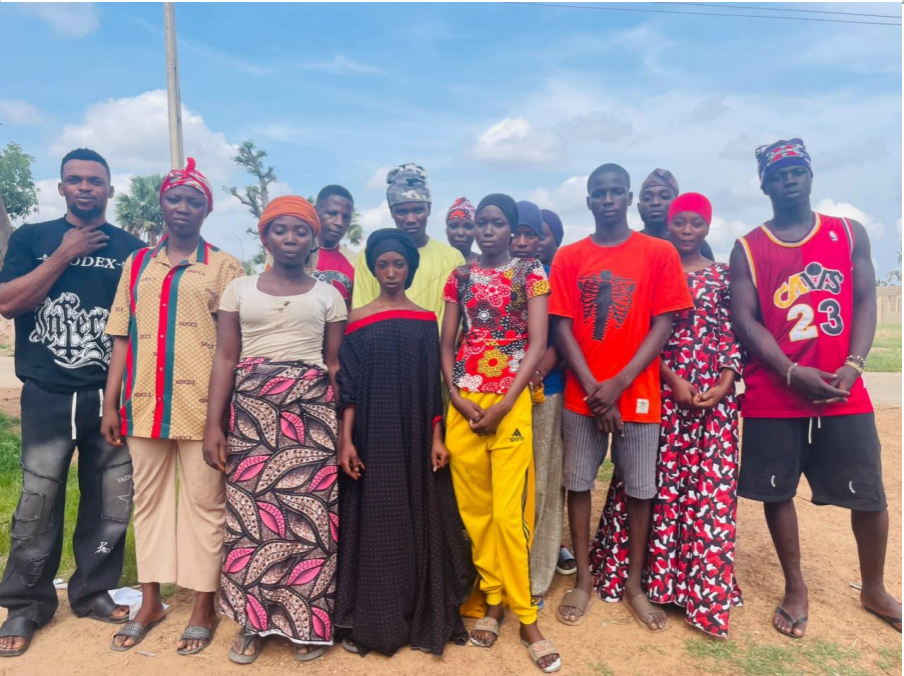
Central African Republic: Community Vegetable Farm
The Bambari Secular Youth Farm
Group Name: Central African Secular Humanists (CASH)
Location of Group and Project: Bambari, Central African Republic
Members: Kibwe Akili, Moussa Kaga, Annette Namona, Idriss Gouandjika, Clarisse Zoungoula
Email: kibweakili@gmail.com
Phone: +236 75 00 11 22
What does humanism mean to you?
To me, humanism is the profound realization that we are entirely responsible for our own lives, our communities, and our ethical choices without relying on divine commands or the threat of religious dogma. Having spent most of my life under rigid religious expectations, stepping into secularism brought me a baseline of genuine freedom, critical thinking, and empathy. Humanism means looking at my young neighbors in Bambari—many of whom are traumatized by regional conflicts or trapped in dogmatic isolation—and saying: "You have value right now, your mind is yours, and we can build a good, loving, and moral society together purely out of human cooperation." It means creating a tangible sanctuary where reason and human kindness are the only laws we need.
Project Description
The Bambari Secular Youth Farm is an initiative designed to establish a self-sustaining community market garden operated entirely by local youth who are questioning religious dogma or seeking a secular community. Agriculture is the economic backbone of our region, yet young people lack both the capital to start projects and a safe environment to speak freely. By securing a small plot of communal land, we will cultivate high-yield, fast-growing staple crops, specifically amaranth (greens), tomatoes, and okra using organic, sustainable farming methods. This hands-on project gives our youth immediate physical agency, teaches them self-reliance, and builds a sense of shared human accomplishment.
More importantly, the farm will serve as a living cover for our secular humanist group. While working the soil, weeding, and harvesting, our members will have a completely safe, unmonitored space to hold open discussions, question traditional dogmas, and explore secular ethics without fear of community backlash. The physical work grounds our philosophical ideas in practical, cooperative reality. The project will run on a democratic structure, where every participant has an equal voice in operational decisions, reinforcing the humanist principles of human dignity, shared responsibility, and equality.
Budget
● Fast-growing vegetable seed bundle (Amaranth, Tomato, Okra) – $35 (Cost reference via Afrimash Seeds Market)
● Hand tools (4 high-grade hoes, 2 spades, 2 rakes for soil preparation) – $110 (Cost reference via Agri-Route Hand Tools)
● Watering cans (4 heavy-duty 10L plastic cans for manual crop irrigation) – $40 (Cost reference via Coast Farmcare Shop)
● Manual knapsack sprayer (16L unit for applying organic neem-based pest control) – $65
● Organic compost and soil treatments (Local organic matter manure and transport) – $50 (Cost reference via Agri4All Precision and Soil Inputs)
● Total: $300
Expected Income from Project, with Timeline
● Month 1–2 (Setup & Planting): Land preparation, tool procurement, and seed sowing. No direct income, but weekly community-building dialogues begin during work shifts.
● Month 3 (First Harvest - Amaranth & Okra): We expect our first major yields of local greens and okra. Selling these fresh at the local Bambari weekly market will yield an estimated $120.
● Month 4–5 (Main Harvest - Tomatoes & Continuous Greens): Tomatoes mature alongside successive greens. Sales at peak harvest are projected to bring in $180–$200
● Month 6 and beyond (Sustainability): Total initial revenue of roughly $300–$320 fully reimburses our startup capital. At this stage, 50% of ongoing profits will be reinvested into next season's seeds and tool maintenance, while the remaining 50% will form a communal stipend for the participating youth, making the project completely self-sustaining.
Benefits to our Community
This project provides a unique dual benefit to the Bambari community by addressing both material and intellectual poverty. On a practical level, it introduces affordable, fresh, and sustainably grown produce to our local market, increasing food security and demonstrating advanced small-scale agricultural techniques to other local youths. Economically, it pulls vulnerable, marginalized young people into a productive venture, giving them tangible skills and financial independence.
On a deeper cultural level, the project quietly challenges the narrative that morality and community cohesion can only exist within religious institutions. By watching a secular, freethinking group run an honest, highly successful, and deeply supportive community program, the neighborhood will see humanism in action. It provides a life-saving alternative for youth who feel alienated by religious structures, proving that we can care for one another, cultivate the earth, and build an ethical community solely through human reason and love.