
Cameroon: Barn and Farm Project
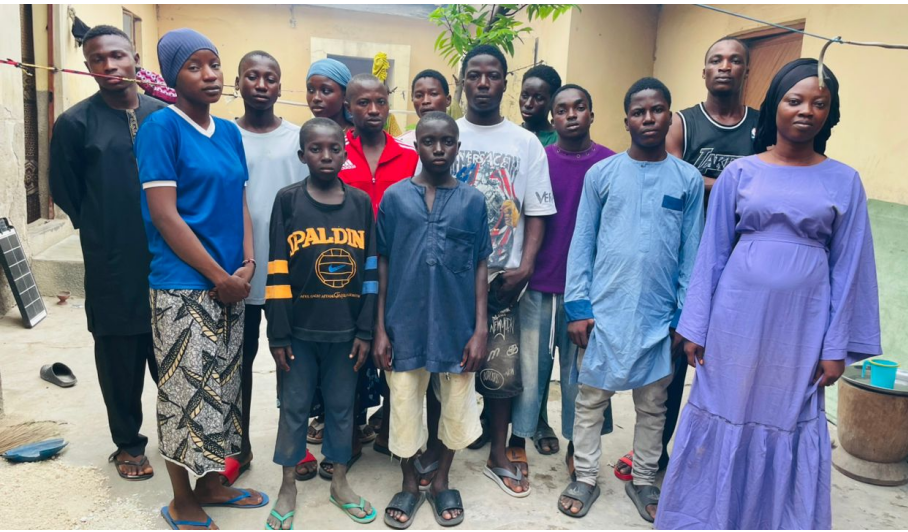
Cameroon: Barn and Farm Project
Farm and Barn Construction
Cameroon Humanist Group
Brikama Ba Village, Cameroon.
Members
○ Ebirima modou | Ebirimamodou@gmail.com | +220 7637922
○ Ebrima Jallow | ebrimajallow321@gmail.com | +220 7654321
○ Modou Sowe | modousowe678@gmail.com | +220 7345678
○ Alieu Bah | alieubah210@gmail.com | +220 7543210
○ Sainey Jammeh | saineyjammeh567@gmail.com | +220 7234567
○ Pa Lamin Drammeh | palamindrammeh789@gmail.com | +220 7456789
○ Lamin Ceesay | laminceesay123@gmail.com | +220 7689123
○ Fatou Camara | fatoucamara456@gmail.com | +220 7123456
○ Awa Jagne | awajagne790@gmail.com | +220 7356790
○ Mariama Sanyang | mariamasanyang198@gmail.com | +220 7432198
○ Isatou Touray | isatoutouray432@gmail.com | +220 7265432
○ Binta Njie | bintanjie456@gmail.com | +220 7312456
Group Email: ebirimamodou@gmail.com
Group Phone: +2207654321
Group Website or Facebook page? No
What does humanism mean to your group?
We are humanists because we believe in leading ethical, compassionate, and rational lives grounded in shared human values. In a country where religion and tradition deeply influence daily life, we have chosen a path rooted in critical thinking, personal responsibility, and universal human rights. Our humanism is not about opposing religion but about promoting a worldview that prioritizes reason, evidence, and empathy over dogma or superstition. We are united by the belief that morality comes from human experience and our common need for fairness, dignity, and well-being, not from fear or divine command. As humanists, we uphold the rights of all individuals to think freely, express themselves honestly, and live without discrimination or coercion based on belief systems.
Our efforts span across various sectors of Gambian society: from education and health to journalism, youth activism, and the arts. We advocate for quality secular education, gender equality, freedom of conscience, scientific progress, and protection of the environment. Many of us work within our communities to promote dialogue, tolerance, and peaceful coexistence, challenging harmful practices through reason and compassion. In embracing humanism, we are helping to shape a Gambia that is more inclusive, thoughtful, and just, a society where people are empowered to live fully and freely as human beings first. Our stance reflects courage and a commitment to positive change, grounded in the conviction that we can build a better world by relying on humanity’s capacity for kindness, logic, and solidarity.
Project Description
The Brikama Ba Humanist Collective seeks to expand our agricultural initiatives by establishing a large-scale farm dedicated to cultivating a diverse range of staple food crops indigenous to The Gambia, paired with the construction of a permanent, locally crafted barn for secure post-harvest storage. Despite facing severe economic adversity and rural poverty, our members remain deeply committed to collective farming as a pathway to long-term sustainability and empowerment. By dramatically increasing the scale of our farming efforts to include resilient, locally adapted crops, we will ensure broader food security for our community while producing surplus for the market.
To complement this expansion, constructing a dedicated storage barn is critical to protect our high-yield harvests from pests, moisture damage, and premature spoilage. Ultimately, this integrated approach, scaling up indigenous crop production and building proper storage infrastructure, will transform our vulnerable group into a self-reliant collective, enabling us to control market timing, maximize agricultural profitability, and generate the reliable income needed to sustain our grassroots humanist activities.
Budget
● Seedlings & Seeds (Indigenous Crops): Sorghum, pearl millet, groundnuts, cowpeas, and cassava cuttings – $150
● Fencing Materials: Wire mesh, treated wooden posts, barbed wire rolls, and fencing staples – $300
● Farming Tools: Wheelbarrows, traditional hoes, cutlasses (machetes), rakes, spades, and watering cans – $180
● Composting & Soil Care: Bulk organic animal manure, dry biomass for compost layering, and natural neem-based pesticides – $120
● General Farm Supplies: 1000-liter water storage tank, heavy-duty irrigation hoses, protective work gloves, and rubber boots – $150
● Barn Construction Materials: Timber for framing, corrugated metal roofing sheets, cement (for a moisture-resistant floor), construction nails, and anti-pest timber coating – $300
● Total Estimated Cost: $1200
Expected Income from Project, with Timeline
The project will operate on a dual timeline covering both farm establishment and barn construction over an initial eight-week period. In the first three weeks, land clearing, seed planting, and foundational barn construction will occur simultaneously. By the end of the eighth week, the barn will be fully enclosed and ready for use just as the earliest crops enter their growth phases.
At the end of the harvest season, the expanded farm is expected to yield substantial quantities of indigenous staples. Without the barn, the group would be forced to sell immediately; however, with secure storage, the crops can be preserved until market demand increases. We project an initial harvest value of approximately $2,500, with the barn allowing us to capture an additional 30% profit margin by selling during off-peak harvest periods, bringing expected gross income to over $3,200.
Benefits to Community
● Massively scales up local food production by focusing on hardy, indigenous crops.
● Provides a durable, weather-proof barn to eliminate post-harvest spoilage and pest loss.
● Empowers the group to hold crops and negotiate better market prices, increasing financial returns.
● Strengthens food security for members year-round.
● Fosters community resilience by marrying traditional crops with structural agricultural improvements.
● Directly injects funds into the local economy by hiring local builders for the barn.
● Generates a sustainable income stream to fund future humanist community outreach and education.