
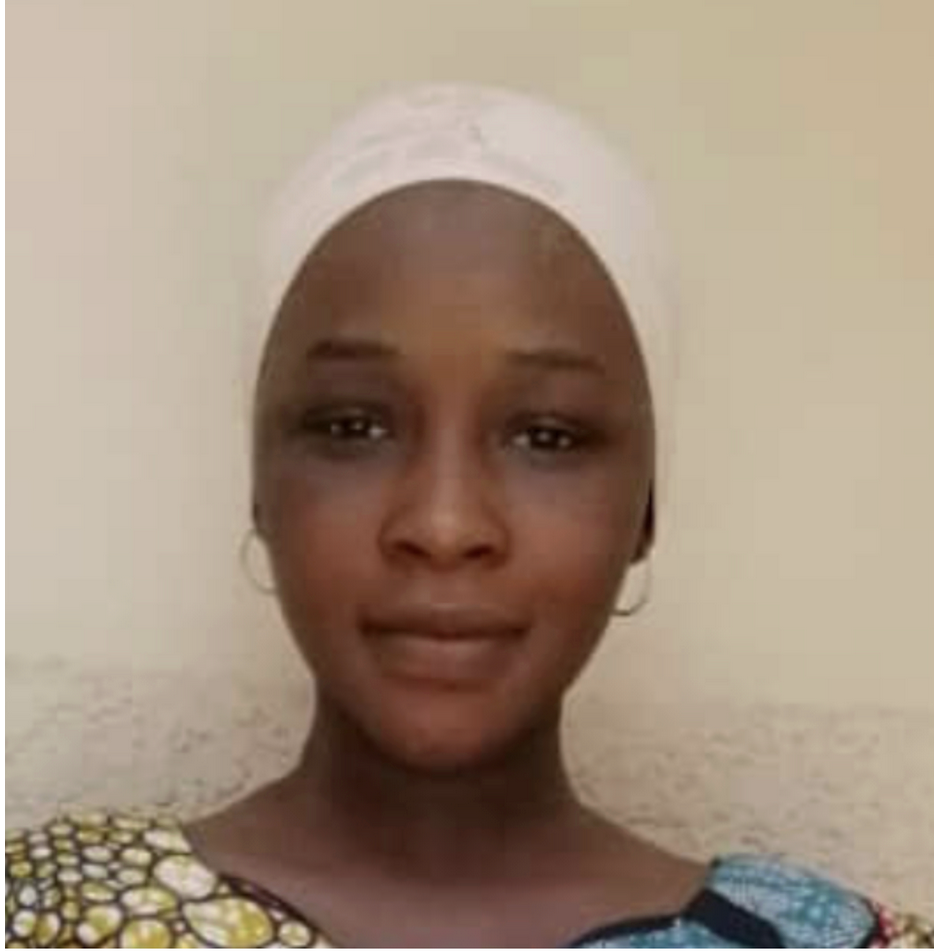
Ayaan Hirsi Ali, Ideas, Contributions, and My Reflections
by Aminata Diop
Ayaan Hirsi Ali is a Somali-born activist, writer, and former atheist figure (though she has more recently converted to Christianity). She has been best known for her outspoken critiques of religious patriarchy, her defense of free speech, and her work for women’s rights, especially for women born into strict religious traditions. After looking at her life, works, and public interventions, here are the three most important contributions she has made, followed by my thoughts and reactions.
Three most important ideas/contributions;
Critique of religious oppression and gender inequality.
Hirsi Ali has drawn attention to how religious doctrine and religious communities can subjugate women. In her memoirs like Infidel and Nomad, she recounts her own childhood: forced marriage, female genital mutilation (FGM), strict gender norms, and the suppression of free speech in religious settings. She argues that in many Muslim societies, cultural and religious traditions restrict girls’ and women’s autonomy over their bodies, minds, and voices. Her book The Caged Virgin and her public speeches make clear that religious beliefs sometimes serve to justify control, not dignity.
Advocacy for free speech and challenging taboo topics.
Hirsi Ali has been fearless in addressing difficult, often taboo subjects: FGM, honor violence, forced marriages, and what she sees as Islamism’s threat to liberal values. She cofounded and led the AHA Foundation, which fights crimes against women and defends free expression. She has criticized both Islamist extremism and, at times, what she calls the West’s reluctance to critique injustice within Muslim communities due to fears of being “Islamophobic.” Her view is that avoiding these discussions prevents progress.
Personal testimony as catalyst for change.
Because she lived what she writes about fleeing forced marriage, surviving FGM, leaving religion, living in different countries, Hirsi Ali brings authenticity and urgency to her arguments. Her personal journey gives her both moral weight and vulnerability. For many, her books and speeches offer not just abstract theory but a model of someone who changed her life, questioned received belief, and spoke out despite danger. This example has encouraged others to question norms, to think critically, and to speak out.
My personal takeaways:
I admire much of what Hirsi Ali has done. Her insistence that religious or cultural tradition must never override human rights is central for me. I believe reason, evidence, and compassion should guide how we treat one another. Her work on FGM and forced marriage shows the harm that belief sometimes causes. Her courage in speaking out, even when threatened, is inspiring.
However, I have some disagreements and reservations. First, her more recent conversion to Christianity raises questions for me. As someone committed to secularism and the separation of belief from ethics, I worry that her move might weaken her ability to critique religion in general or Islam in particular without being accused of bias. It could complicate her message for those who looked to her as an atheist voice.
Also, while she highlights real injustices, sometimes her framing (e.g. Islam vs the West, traditions vs modernity) can feel stark, risking painting whole communities with a broad brush. There is danger in generalization, some religious people also oppose injustice, and change can come from within religious communities just as well as from outside. The struggle for women’s rights is not always a clash of religion vs secularism; often it’s about power, class, education, and law.
Overall I agree with much of her message, especially the parts about women’s bodily autonomy, free speech, and the necessity of truth-telling. But I believe that criticism of religion must be done carefully, with empathy, so it does not feed prejudice. Her life shows that sometimes speaking truth is painful, but necessary. Her contributions are powerful reminders that belief is not beyond critique, especially when belief harms. Her example pushes me as an atheist to live honestly, question norms, and support human dignity wherever religion is used to silence or oppress.
—
Female Genital Mutilation, (AME Medical Journal)
by Aminata Diop
This medical article gives a clinical overview of Female Genital Mutilation, describing what it is, how it’s classified, its health effects, and the medical and ethical challenges around it. It is written by doctors who treat women affected by FGM and aims to raise awareness in the medical community. Reading it gave me both sadness and respect: sadness for the pain women go through, and respect for the doctors who try to repair what should never have been done in the first place.
Three most important points the authors make:
FGM has no medical benefit and causes severe health problems.
The article begins by explaining the four main types of FGM as defined by the World Health Organization (WHO). It states clearly that none of these procedures have any medical or health benefit. Instead, they cause both short-term and long-term harm. These include severe bleeding, infections, chronic pain, urinary problems, sexual difficulties, complications in childbirth, and even death. The authors stress that FGM is not a medical practice but a violation of the body that destroys normal anatomy and function.
Healthcare workers must understand and respond with empathy and skill.
Many women affected by FGM are afraid to seek medical care, or they live in countries where doctors are not trained to manage FGM complications. The article calls on healthcare professionals to be educated, sensitive, and respectful when treating these women. It includes diagrams and clinical explanations to help doctors perform deinfibulation (reopening of the scar) and other reconstructive procedures safely. The authors emphasize that empathy and non-judgment are essential in caring for survivors.
Medicalization of FGM is dangerous and unethical.
The article warns against the growing trend of “medicalized” FGM when health workers perform the procedure thinking it makes it safer. The authors strongly condemn this, saying it gives false legitimacy to a harmful practice. They insist that medical professionals should work to end FGM, not make it “safer.” Doing it under sterile conditions does not make it right.
My personal takeaways:
As a rational humanist, I judge actions by their real effects on people. FGM clearly causes harm, physical, emotional, and social. This article provides the medical evidence for what humanists already know morally: no one has the right to damage another person’s body for cultural or religious reasons. Reading about the medical consequences was disturbing. It reminded me that behind every statistic is a real human being living with pain and loss.
I strongly agree with the authors’ rejection of medicalized FGM. Trying to make something harmful “safe” is like trying to make slavery “comfortable.” The only ethical position is total opposition. I also agree with their call for empathy in treatment. Too often, survivors face judgment or silence. Doctors must be trained to treat them with compassion and understanding, not shame.
However, I also think prevention must go hand in hand with medical care. Repairing damage is good, but stopping new cases is better. That means stronger public education, community dialogue, and laws that truly protect girls.
As an atheist, I see no divine justification that can excuse the harm caused by FGM. All moral worth comes from reducing suffering and increasing happiness. FGM does the opposite.
Final:
This medical article turns emotion into evidence. It shows the hard facts of harm and reminds us that ending FGM is not only a moral duty but also a medical necessity. Human compassion, backed by scientific knowledge, is the path forward.
—
Profile of Female Genital Mutilation in Kenya
by Aminata Diop
This UNICEF report presents data and analysis about the state of FGM in Kenya. It gives facts about how common it is, where it happens most, who performs it, and how attitudes toward it are changing. The report is not just about numbers but also about human suffering, social pressure, and progress in ending this harmful practice.
Three most important points the report makes:
FGM is declining overall, but still persists in specific communities.
The report shows that Kenya has made real progress: Some ethnic groups like the Somali, Samburu, and Kisii still have very high rates, while others have almost none. (UNICEF 2020 FGM Profile) This means that FGM is no longer a national problem equally shared but rather a cultural problem concentrated in certain communities.
FGM is linked to social norms, marriageability, and gender control.
The report explains that many families still practice FGM because it is seen as a requirement for marriage, a way to preserve purity, or a tradition that defines community belonging. Some girls even ask for it to gain social acceptance. These beliefs show how deeply gender inequality shapes the continuation of FGM. The report also highlights that the practice is tied to control of female sexuality rather than any real medical or moral value.
Education, law enforcement, and community dialogue are reducing FGM.
The government of Kenya has criminalized FGM, set up the Anti-FGM Board, and supported campaigns like the “Alternative Rites of Passage.” The report credits education, advocacy, and community-led programs for changing attitudes. However, it warns that hidden practices, medicalization, and cross-border cutting (especially near Somalia and Tanzania) remain challenges.
My personal takeaways:
As a rational humanist and atheist, I base morality on human welfare and harm reduction. Reading this report made me proud of Kenya’s progress but also reminded me how harmful traditions can survive when supported by social norms. I completely agree that FGM is not a private cultural matter but a human rights issue. It causes lifelong trauma, pain, and loss of autonomy. No one has the right to cut another person’s body in the name of culture or religion.
I strongly support the report’s focus on education and community engagement. People do not abandon deep traditions by force; they abandon them when they understand why they cause harm. Education, especially for girls, is the most powerful weapon against FGM. The idea of “Alternative Rites of Passage” is smart, it replaces the harmful act while keeping community celebration.
However, I have some concerns. Laws alone may push the practice underground. Many families now cut girls secretly or travel across borders. This shows that ending FGM requires more than law; it requires trust and conversation inside communities. Also, as the report notes, the role of men is often missing. Without men rejecting the demand for cut wives, progress will slow.
In my humanist view, ending FGM is part of a larger moral duty to promote equality and autonomy. The body belongs to the individual, not the community. Every girl should grow up free from fear and coercion.
Final thought:
Kenya’s story shows both hope and caution. Change is possible when people are informed and empowered. But until every girl’s body is respected, the work is not done. Ending FGM is not a Western idea, it is a human idea rooted in compassion, evidence, and freedom.
——
How to Deliver Sanitary Pads to Marginalized Communities
by Aminata Diop
I want to share why affordable sanitary pads are so important, what the situation is like in Senegal, what I would do if chosen to distribute pads, and how I feel about speaking in public and leading.
1) Importance of affordable sanitary pads
Affordable sanitary pads are essential for girls’ dignity, health, and education. When girls don’t have proper pads, they may miss school during their periods. This makes them fall behind and can affect their future. Also, using unsanitary materials (old cloths, rags, unsafe substitutes) can cause infections, irritation, or worse health problems. Affordable pads help ensure that every girl can attend school regularly and remain healthy. They also reduce stigma and shame around menstruation when girls feel clean and prepared.
2) Sanitary pads in my region:
In many parts of Senegal, especially rural areas or disadvantaged urban neighborhoods, girls sometimes miss school because they cannot afford sanitary pads. I know girls who use old cloths or even paper, because that is what they have. Sometimes those materials are not clean or dry, so infections like yeast infections or skin rashes happen. I have heard stories of girls being ashamed and staying home during menstrual days. In some villages pads are expensive or not sold locally, so transport costs make them more costly. So yes: absence from school happens; health risks happen; the need is real.
3) Distribution plan with $300 budget: What I would do if chosen to distribute sanitary pads. If I were selected to distribute sanitary pads, I would plan carefully. I would choose to take 300 disposable pads plus 100 reusable cloth pads (for sustainability) because reusable ones help girls who cannot always buy disposables. I would go to rural areas regions, where poverty is high and supply is low. Also, I would include some urban slums in Dakar.
Supplies I would need:
300 disposable sanitary pads
• 100 cloth reusable pads.
• Small cloth or paper bags for distribution (100 pieces).
• Soap bars (for hygiene), about 50 bars.
• Educational flyers in local language.
• Transport cost to reach the village (motorbike or shared transport).
Budget breakdown:
1. Item and quantity: 300 disposable pads. Estimated Cost per item (USD): $0.40 each. Total (USD): $120.
2. Item and quantity: 100 reusable cloth pads. Estimated Cost per item (USD): $1.20 each. Total (USD): $120.
3. Item and quantity: 100 Bags for distribution. Estimated Cost per item (USD): $0.20 each. Total (USD): $20.
4. Item and quantity: 50 Soap bars. Estimated Cost per item (USD): $0.50 each. Total (USD): $25.
5. Item: Flyers & printing. Total (USD): $10.
6. Item: Transport. Total (USD): $5.
Estimated Total ≈ $300.
Implementation: I would spend 1-2 days going to the rural area to deliver pads, hold a small session with women/girls about hygienic pad use, cleaning reusable pads, and safe disposal.
4) Am I a comfortable public speaker? Do I enjoy leadership roles?
Yes, I am reasonably comfortable speaking in public. As a woman in Senegal who is atheist, taking leadership roles sometimes means going against strong tradition, but I feel that courage comes from conviction. I enjoy organizing, coordinating, teaching. My belief in humanism pushes me to speak out about matters that affect women and girls, even when it’s uncomfortable. Distributing sanitary pads would not only help materially but also symbolically: showing girls they are worthy of dignity. I would lead this project with pride, humility, and the belief that change begins when someone stands up.