
Central African Republic - Yam Barn and Grain Silo
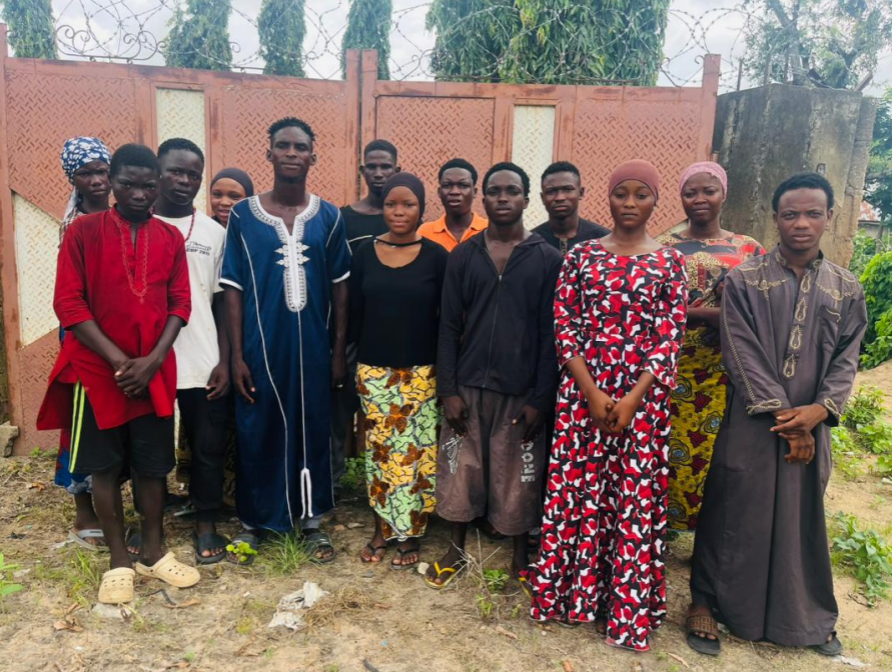
Central African Republic - Yam Barn and Grain Silo
Group: Central African Secular Humanists
Location: Bambari, Central African Republic
Members: Kibwe Akili, Moussa Kaga, Annette Namona, Idriss Gouandjika , Clarisse Zoungoula
Email: kibweakili@gmail.com
Phone: +23675001122
What does humanism mean to you?
To me, humanism is the profound realization that we are entirely responsible for our own lives, our communities, and our ethical choices without relying on divine commands or the threat of religious dogma. Having spent most of my life under rigid religious expectations, stepping into secularism brought me a baseline of genuine freedom, critical thinking, and empathy. Humanism means looking at my young neighbors in Bambari—many of whom are traumatized by regional conflicts or trapped in dogmatic isolation—and saying: "You have value right now, your mind is yours, and we can build a good, loving, and moral society together purely out of human cooperation." It means creating a tangible sanctuary where reason and human kindness are the only laws we need.
Project Description
Following the success of our initial farming cycles, The Bambari Secular Youth Farm is expanding to address a critical post-harvest challenge. While our youth team has proven capable of producing impressive yields of staple crops, significant post-harvest losses due to moisture, rot, pests, and inadequate storage threaten our long-term economic independence. To solve this, we are requesting $700 from HuMAN to construct two units of local grain silos and a dedicated traditional elevated yam barn.
These post-harvest storage facilities will allow us to safely store harvested grains and tubers, protecting them from decay and market price fluctuations. By holding produce securely and selling during off-peak seasons, our youth will maximize earnings, prevent food waste, and secure the farm's financial resilience. Simultaneously, the construction and maintenance of these facilities will continue to serve as a living cover and safe physical anchor for our secular humanist group. While building and managing storage, members will maintain an unmonitored space for open discussion, critical inquiry, and mutual support grounded in humanist ethics.
Budget
● Local Grain Silo Construction (2 units: masonry, sheet metal, sealant, and skilled labor) – $380
● Yam Barn Construction (Elevated wooden/bamboo frame, thatched roofing, pest treatment, and labor) – $220
● Storage Containers & Moisture-Proof Treatment (A hermetic sealing treatment and handling bags) – $100
Total: $700
Expected Income from Project, with Timeline
● Month 1 (Procurement & Construction): Material acquisition and local construction of 2 grain silos and 1 yam barn. Weekly humanist discussions continue during build shifts.
● Month 2–3 (Post-Harvest Storage & Processing): Grains and yams harvested from upcoming yields are cured, treated, and safely stored in the new facilities, eliminating immediate post-harvest decay.
● Month 4–5 (Strategic Off-Season Market Sales): Stored grains and preserved yams are released to the local Bambari market during periods of low supply, bringing in an estimated $450–$550 in sales.
● Month 6 and beyond (Long-Term Sustainability): Revenue generated covers routine maintenance and reinvestment in future planting cycles. Reduced crop loss guarantees a steady profit margin, 50% of which supports ongoing seed purchases and tool upkeep, while 50% provides consistent communal stipends for participating secular youth.
Benefits to your Community
This expansion delivers vital material and social benefits to Bambari. Practically, it directly targets local food insecurity by mitigating post-harvest losses, ensuring a steady supply of preserved grains and yams in the market even during dry periods. It equips local youth with practical construction and crop preservation skills, turning agricultural vulnerability into sustainable economic independence.
Culturally, the project reinforces the visibility and efficacy of humanism in action. Demonstrating that a secular, freethinking group can solve complex community challenges like post-harvest loss through practical science, planning, and cooperation offers a compelling alternative to dogmatic dependence, showing that ethical, thriving communities are built through human reason and mutual care.