
Equatorial Guinea: Humanist Farm
Equatorial Guinea: Humanist Farm
Humanist Farm Project
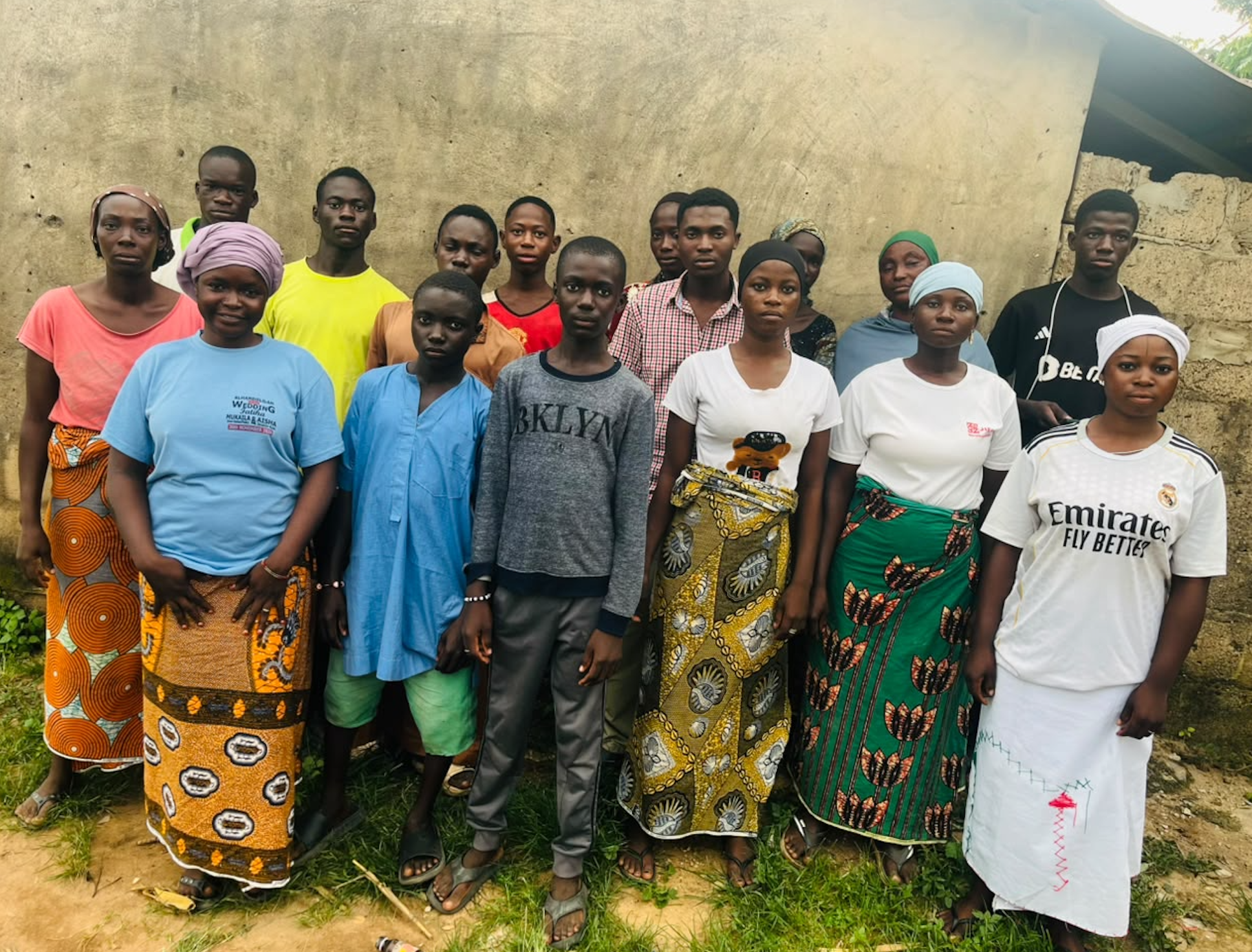
Group: The Humanist Lighthouse Group
Location: Mondongo, Bata, Equatorial Guinea.
Members: Rosa Okomo, Teresa Mangue, Lucia Osa, Isabel Esono, Elena Mba, Sofia Nguema, Carmen Abeso, Ana Micha, Juan Obiang, Carlos Edu, Pedro Asumu, Luis Nsue, Antonio Miko, Francisco Ntutumu, Miguel Engonga
What Does Humanism Mean to You?
For the fifteen of us gathering here in Equatorial Guinea, friends like Sofia, Carlos, and Isabel, humanism isn't just an abstract philosophy; it's a lifeline. We found each other through our shared, often painful experiences in a culture that demands unquestioning faith. We’ve stood by as loved ones succumbed to preventable illnesses, heartbroken when those losses were passively dismissed as "God's will" instead of being recognized as local healthcare failures that desperately need scientific solutions.
When some of us dared to speak up against the mistreatment of marginalized people justified by religious texts, or simply wanted to feed our impoverished neighbors without forcing them to pray, we faced intense social exile. Forming this group has finally given us a safe harbor. It’s a place where we can breathe, ask critical questions without fear of being condemned, and help our communities out of pure, genuine empathy rather than transactional religious obligation. Letting go of a "Godly" worldview and embracing what our society insults as "godlessness" has been the most beautiful and grounding awakening of our lives.
We used to look up for salvation, but now we look right at each other. We’ve realized that there is no cosmic safety net and no divine judge coming down to fix our country's struggles; if we want justice and equality here, we have to roll up our sleeves and build it ourselves. Seeing the tangible, compassionate work overseen by HuMAN leaders has shown us exactly what organized secular goodness looks like in action. We no longer rely on the fear of hell to keep us moral. Instead, we are focused entirely on the here and now, doing good simply because we see the inherent worth of every human being, and because we feel an urgent, passionate responsibility to make this one life we share as fair and kind as possible.
Project Description
We are seeking a US$450 micro-grant from HuMAN to establish a small Humanist Community Farm in Mondongo, Bata. The farm will produce fresh vegetables and other locally suitable crops while creating a practical source of food, income, skills, and community cooperation for our group. Many families in our community face economic challenges that make access to nutritious food difficult, while unemployed and underemployed people have limited opportunities to develop sustainable sources of income.
We want to respond to these challenges through practical, community-led action. The farm will begin on a small scale using locally available land and labor. The grant will provide the basic tools, seeds, soil inputs, water containers, fencing materials, and other essential supplies needed to prepare the land and begin cultivation. Group members will contribute their time and labor to clearing, planting, watering, maintaining, harvesting, and managing the farm. We plan to grow crops that are practical for local conditions and have strong household and market demand, allowing part of the harvest to support community needs while the remainder can be sold to generate income for the continuation and expansion of the project.
From a humanist perspective, the farm represents more than agriculture. It is an opportunity to demonstrate that we can care for one another through practical action. Rather than waiting for outside or supernatural solutions to problems such as hunger and poverty, we want to use our collective knowledge, labor, and resources to create something tangible. The project will strengthen our group's self-reliance while providing a constructive way for us to contribute to the wider community.
Budget
Seeds and planting materials — $70
Basic farming tools — $100
Watering cans and water containers — $60
Organic manure and soil inputs — $60
Fencing and basic farm protection — $70
The grant will be used primarily for productive assets and startup materials. Group members will provide volunteer labor and collective management, helping keep operating costs low and increasing the likelihood that the farm can become self-sustaining.
Expected Income from Project, with Timeline
The farm will require an initial cultivation period before significant income can be generated. During the first month, the group will prepare the land, purchase supplies, establish basic protection for the farm, and begin planting. During the second and third months, members will focus on regular watering, weeding, crop maintenance, and monitoring. Depending on the crops planted and their growing periods, the first harvests are expected to begin generating food and sales income in the following months.
Our goal is to establish regular harvests that can provide food for participating families and produce for sale in the local community. Proceeds from early harvests will be reinvested into seeds, soil inputs, tools, and additional cultivation so that the project can continue growing. As production increases, we expect the farm to develop into a reliable small-scale income-generating activity. The long-term objective is for the farm to recover its recurring production costs from its own sales, allowing it to continue operating without depending permanently on grants. Profits can also be reinvested into expanding the cultivated area, introducing additional crops, and supporting other community projects undertaken by Faro Humanista Group.
Benefits to the Community
The Humanist Community Farm will provide several direct benefits to the people of Mondongo and surrounding communities. First, it will increase access to fresh, locally grown food and create an additional source of nutritious produce for participating families and local customers. Second, it will create a small but sustainable economic opportunity for members of Humanist Lighthouse Group and help develop practical skills in agriculture, business management, budgeting, teamwork, and food production. The project will also support the local economy by purchasing farming materials locally whenever possible and selling produce within the surrounding community. By producing food locally, we can reduce some dependence on purchased produce and create a cycle in which farm income is reinvested into continued production.
Beyond its economic and agricultural value, the farm will be a practical expression of our humanist principles. It will demonstrate that compassion does not have to remain an idea or a belief; it can be expressed through planting food, sharing resources, creating opportunities, and helping people become more self-reliant. We want the farm to become a positive example of secular community cooperation in which people work together simply because improving human lives matters.
Sustainability and Future Plans
Our intention is for the farm to continue operating long after the initial US$450 grant has been used. Because group members will contribute volunteer labor and the project will generate its own income over time, we expect the farm to gradually become financially independent. As production grows, we plan to expand the cultivated area, introduce additional crops, improve water management, and develop relationships with local buyers. We also hope to use the farm as a practical learning space where group members can share agricultural knowledge and encourage other community members to explore small-scale food production. In the future, the farm could also provide a foundation for other humanist community initiatives, including food assistance, agricultural training, and additional income-generating activities.
Conclusion
The Humanist Lighthouse Group is seeking US$450 from HuMAN to establish the Humanist Community Farm in Mondongo, Bata. This modest investment will provide the basic resources needed to turn available land, collective labor, and community motivation into a productive and sustainable project. For us, humanism means recognizing human needs and taking responsibility for addressing them. This farm is an opportunity to put that belief into practice by producing food, creating economic opportunity, developing skills, and strengthening community self-reliance.
We believe that the success of this project will not be measured only by the amount of food harvested or income generated, but also by the people who gain skills, confidence, and opportunities through working together. With HuMAN's support, we hope to demonstrate once again that a small investment in grassroots humanist action can create lasting benefits for both individuals and the wider community. Thank you for considering our application.